Lesson 73: A Different Solution
Procedure
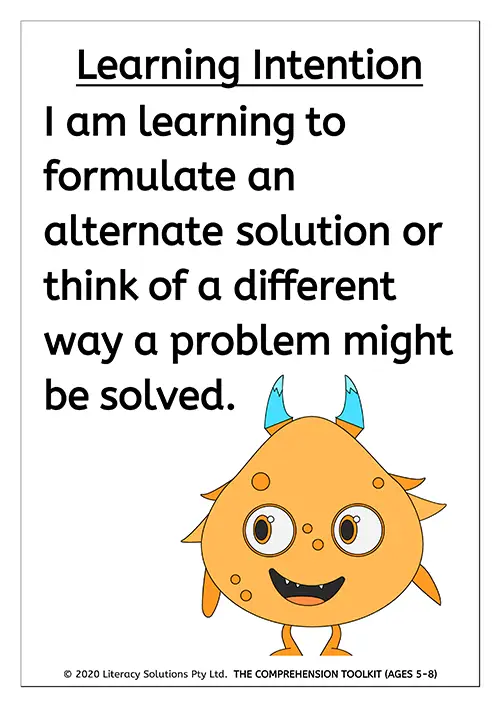
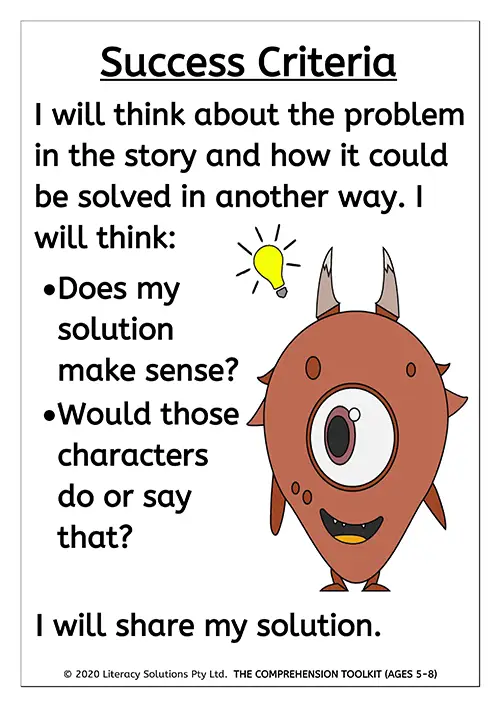
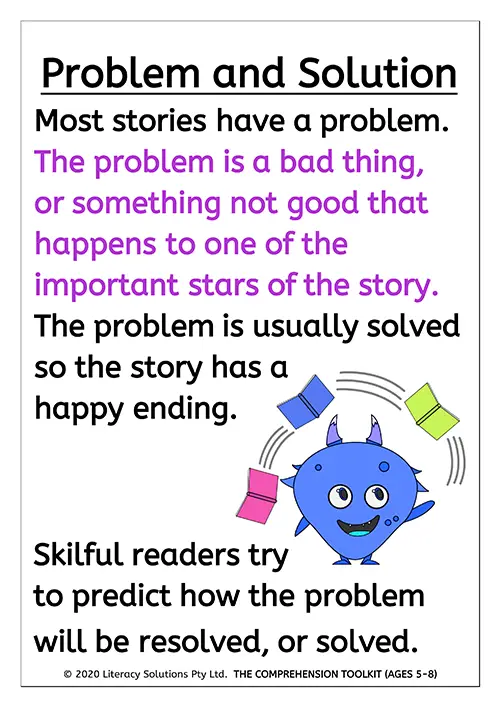
- Introduce Chart 1, 2 and 3. Explain that great readers think about how characters will solve problems in stories. They are often able to think of more than one way the character’s problem could be solved. Sometimes they do this after reading, but often great readers think of solutions while the story is still happening.
- Introduce the text you have selected (refer to ‘How to implement a lesson’.)
- Read and discuss the text.
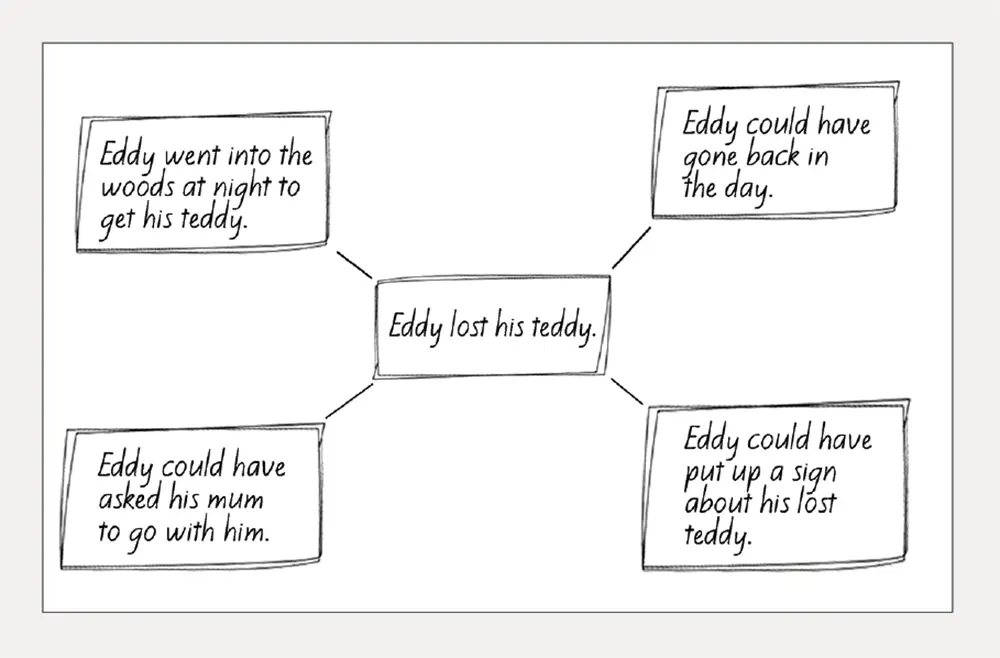
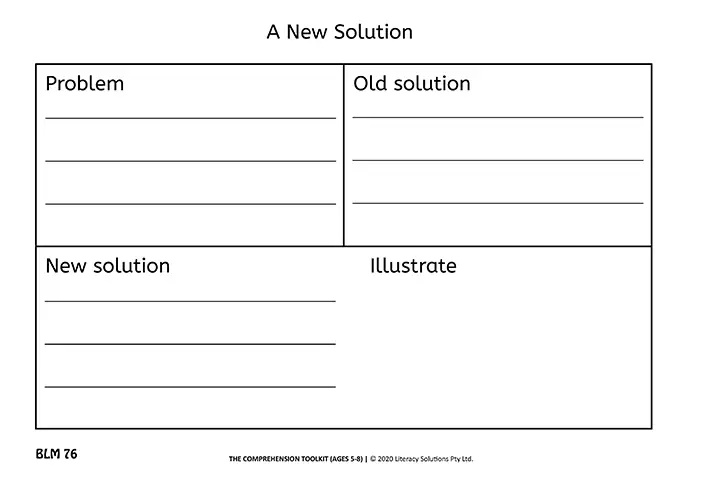
- Draw a box in the middle of the board and write the heading ‘Problem’ inside the box. Have students recall the problem in the story. Record the problem in the box.
- Draw boxes around the ‘Problem’ box. Draw lines from the ‘Problem’ box to the other boxes.
- Have students recall the solution to the story’s problem. Write this in one of the new boxes
- Explain that there are many ways to solve a problem, but they must always make sense and match the way characters act or behave.
Applying
- Have students chat with a partner and think of another solution to the problem. Note: Prior to this chat students may need to revisit the text.
Checking for understanding
- Invite students to share their solutions and prompt thinking: Does that solution make sense? Would the character/s say or do that?
- If the answer is ‘yes’ to both questions it is recorded in a box. Add more boxes if required.
Learning reflection
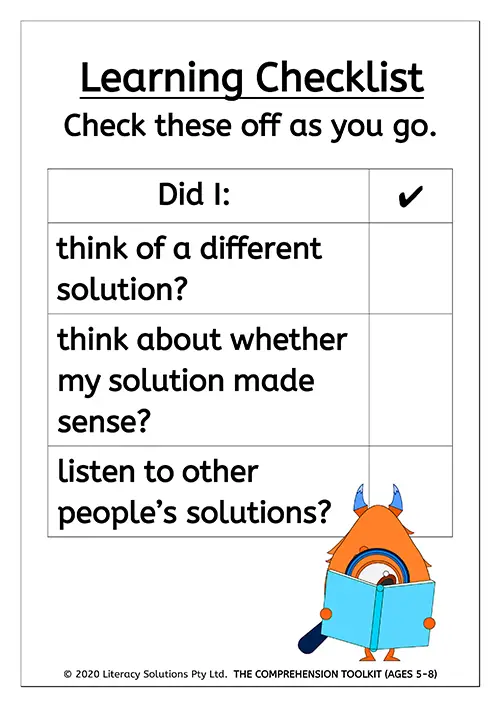
- Introduce Chart 4. Prompt for reflection using the learning checklist.
Lesson charts
Text models
I’m Sorry by Sam McBratney, or any narrative or section of a narrative with a problem which could be solved in multiple ways
Blackline masters
Suggestions for teaching
Recommended approach
- Print the comprehension poster for permanent display in your classroom.
- Use a digital display such as an electronic board or television monitor for lesson charts and text models.
Alternative approaches
- Print all lesson charts. Use a digital display such as an electronic board or television monitor for text models.
- Print lesson charts and text models for use with your whole class or small group.
Copying or modification of resources
All charts and artwork, including illustrations, text models and photographs provided on the Literacy Teachers’ Academy website are protected by copyright. Copying, replicating or modifying any part of these resources for any use, other than their original purpose is strictly prohibited.